Hội An Temple
During the Vietnam War, Hoi An, a historic town known for its ancient architecture, became a strategic area due to its location and challenging terrain. The U.S. and South Vietnamese forces conducted frequent operations around Hoi An, targeting Việt Cộng and North Vietnamese Army positions.
Internal name: mcv_temple.bsp
Supported gamemodes: Capture The Flag, Conquest, Deathmatch, FireFight, Gun Game, Gun Game Deathmatch, Last Man Standing, Last Team Standing, Team Deathmatch
-
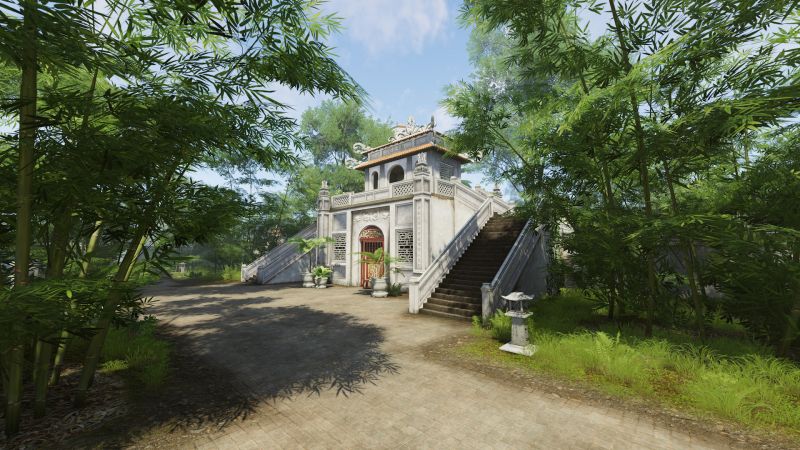 Mapicon
 -
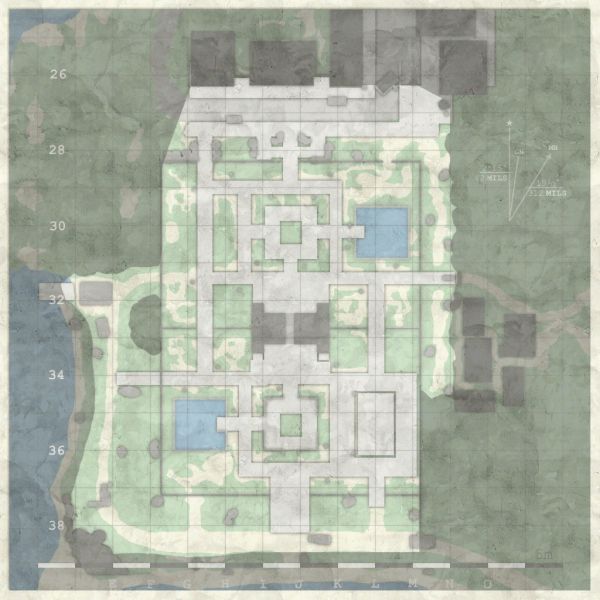 Minimap


History
Hội An Temple is set in and around the historic town of Hội An, a long-established riverside port in Quảng Nam Province near the mouth of the Thu Bồn River. Known for its traditional architecture, merchant houses, assembly halls, and temples, Hội An was one of central Vietnam’s most distinctive urban centers. Its river access and position south of Đà Nẵng also gave the surrounding area strategic value during the Vietnam War.
Although Hội An was better known for its historic character than for large conventional battles, the wider Quảng Nam lowlands became one of the most heavily contested regions in I Corps. American, South Vietnamese, and allied forces conducted repeated operations across the province against Việt Cộng and North Vietnamese positions, while guerrilla units, sappers, and local force battalions used the villages, paddies, and waterways of the area to threaten towns, roads, and military installations.
By 1967, official U.S. histories described much of the trouble in Quảng Nam as concentrated in the triangle formed by Đà Nẵng, Hội An, and An Hòa. As American forces shifted attention and manpower elsewhere, Communist forces increased pressure in the southern part of the province. At the end of August 1967, they attacked and partly overran Hội An along with two district towns, showing that even a historic provincial center near major allied bases was still vulnerable to sudden assault.
The area remained under pressure into 1968. During the Tet Offensive, fighting again reached Hội An as part of the broader attacks across Quảng Nam and the Đà Nẵng area. In that sense, the setting of Hội An Temple reflects a real wartime contrast: a city famous for old religious and commercial architecture, but surrounded by a countryside where the war was close, persistent, and often fought through ambushes, raids, and short, violent attacks rather than long front-line battles.
Sources
- UNESCO World Heritage Centre, Hoi An Ancient Town — https://whc.unesco.org/en/list/948/
- U.S. Marine Corps, The Marines in Vietnam, 1954-1973: An Anthology and Annotated Bibliography — https://www.marines.mil/Portals/1/Publications/The%20Marines%20In%20Vietnam%201954-1973%20An%20Anthology%20and%20Annotated%20Bibliography%20PCN%2019000309300_1.pdf
- U.S. Army Center of Military History, Taking the Offensive, October 1966-September 1967 — https://history.army.mil/portals/143/Images/Publications/catalog/76-4.pdf
- U.S. Marine Corps, U.S. Marines in Vietnam: The Defining Year, 1968 — https://www.marines.mil/Portals/1/Publications/US%20Marines%20In%20Vietnam%20The%20Defining%20Year%201968%20%20PCN%2019000313800_3.pdf