Phú Thọ Plantation: Difference between revisions
Skizmophonic (talk | contribs) Created page with "Category:Maps Category:Maps of Vietnam MAP DESCRIPTION <b><i>Internal name:</i></b> mcv_[[]].bsp <b><i>Supported gamemodes:</i></b> Capture The Flag, Conquest, Deathmatch, FireFight, Gun Game, Gun Game Deathmatch, Last Man Standing, Last Team Standing, Team Deathmatch <center> <gallery widths=800px heights=600px> File:|Mapicon File:|Minimap </gallery> </center> =HISTORY= TEXT GOES HERE <br>[ SOURCE] <hr> <gallery mode="packed" heights="400px"> File: <..." |
Skizmophonic (talk | contribs) Style Zombies links with #ff6905 |
||
| (4 intermediate revisions by the same user not shown) | |||
| Line 1: | Line 1: | ||
[[Category:Maps]] | [[Category:Maps]] | ||
[[Category:Maps of Vietnam]] | [[Category:Maps of Vietnam]] | ||
At Phú Thọ Plantation, a North Vietnamese unit stayed behind to cover a civilian evacuation. As infected advanced across the rice fields, the unit held the mansion until it was overrun. | |||
<b><i>Internal name:</i></b> mcv_[[]].bsp | <b><i>Internal name:</i></b> mcv_[[mansion]].bsp | ||
<b><i>Supported [[gamemodes]]:</i></b> | <b><i>Supported [[gamemodes]]:</i></b> [[Zombies|<span style="color:#ff6905;">Zombies</span>]] | ||
<center> | <center> | ||
<gallery widths=800px heights=600px> | <gallery widths=800px heights=600px> | ||
File:|Mapicon | File:Mcv_mansion.jpg|Mapicon | ||
File:|Minimap | File:Mcv_mansion_radar.jpg|Minimap | ||
</gallery> | </gallery> | ||
</center> | </center> | ||
= | == History == | ||
Under French rule, southern Vietnam was reorganized around export agriculture, especially in Cochinchina and the Mekong Delta. From the late nineteenth century onward, colonial authorities expanded canals, opened new land to cultivation, and tied the countryside more closely to the ports and trading houses of Sài Gòn and Chợ Lớn. In this system, plantations and large estates were not isolated rural properties, but part of a wider colonial economy built around rice production and export. | |||
This plantation order was highly unequal. Land became concentrated in the hands of large owners, merchants, and colonial interests, while many rural Vietnamese worked as tenants or laborers. High rents, debt, and insecure access to land shaped everyday life across much of the southern countryside. Although agricultural output grew under French rule, most of the benefits went to the colonial state, French business interests, and a relatively small local elite. | |||
A plantation house in this setting would fit the world of wealthy landowners created by that economy. In southern Vietnam, some elite residences from the late nineteenth and early twentieth centuries combined Vietnamese layouts with French facades, imported materials, and European decorative features. These houses reflected the wealth and status of families tied to land, trade, and the colonial system. | |||
By the mid-twentieth century, war and political change began to break apart the old plantation order. Even so, the history of French plantations in southern Vietnam remained visible in the region's canals, rice lands, patterns of landownership, and surviving colonial-era houses. | |||
== Sources == | |||
* Encyclopaedia Britannica, ''Vietnam - Effects of French colonial rule'' — https://www.britannica.com/place/Vietnam/Effects-of-French-colonial-rule | |||
* Encyclopaedia Britannica, ''Vietnam - The conquest of Vietnam by France'' — https://www.britannica.com/place/Vietnam/The-conquest-of-Vietnam-by-France | |||
* BiblioAsia, ''Chinese Rice Commerce and the Transformation of Sai Gon–Cho Lon in Colonial Vietnam'' — https://biblioasia.nlb.gov.sg/chapters-on-asia-2020/chinese-rice-commerce-colonial-vietnam/ | |||
* Vietnam National Authority of Tourism, ''Binh Thuy ancient house – a must-see destination'' — https://vietnamtourism.gov.vn/en/post/6992 | |||
<hr> | <hr> | ||
| Line 30: | Line 42: | ||
{{# | {{#ev:youtube|Z69zoIO5fSI}} | ||
{{#ev:youtube|uepgDrhHgag}} | |||
| | |||
}} | {{#ev:youtube|0zZnQmcVxWc}} | ||
Latest revision as of 00:15, 15 June 2026
At Phú Thọ Plantation, a North Vietnamese unit stayed behind to cover a civilian evacuation. As infected advanced across the rice fields, the unit held the mansion until it was overrun.
Internal name: mcv_mansion.bsp
-
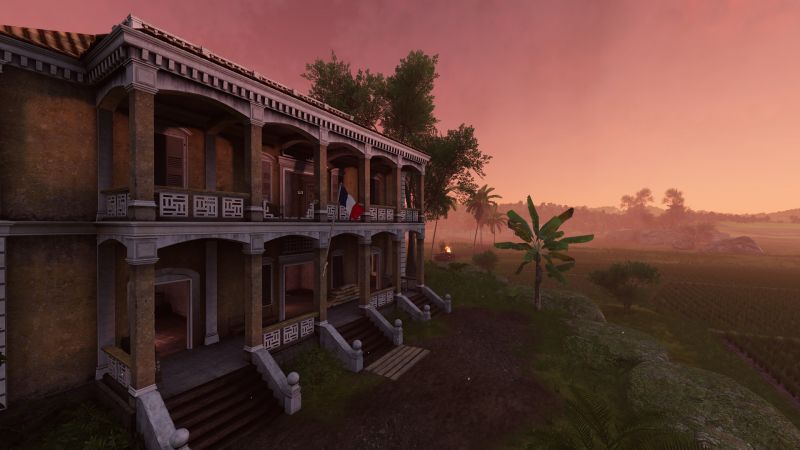 Mapicon
 -
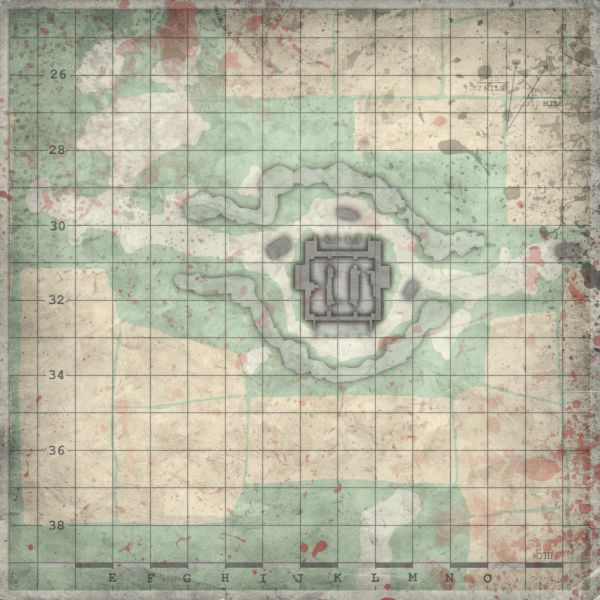 Minimap


History
Under French rule, southern Vietnam was reorganized around export agriculture, especially in Cochinchina and the Mekong Delta. From the late nineteenth century onward, colonial authorities expanded canals, opened new land to cultivation, and tied the countryside more closely to the ports and trading houses of Sài Gòn and Chợ Lớn. In this system, plantations and large estates were not isolated rural properties, but part of a wider colonial economy built around rice production and export.
This plantation order was highly unequal. Land became concentrated in the hands of large owners, merchants, and colonial interests, while many rural Vietnamese worked as tenants or laborers. High rents, debt, and insecure access to land shaped everyday life across much of the southern countryside. Although agricultural output grew under French rule, most of the benefits went to the colonial state, French business interests, and a relatively small local elite.
A plantation house in this setting would fit the world of wealthy landowners created by that economy. In southern Vietnam, some elite residences from the late nineteenth and early twentieth centuries combined Vietnamese layouts with French facades, imported materials, and European decorative features. These houses reflected the wealth and status of families tied to land, trade, and the colonial system.
By the mid-twentieth century, war and political change began to break apart the old plantation order. Even so, the history of French plantations in southern Vietnam remained visible in the region's canals, rice lands, patterns of landownership, and surviving colonial-era houses.
Sources
- Encyclopaedia Britannica, Vietnam - Effects of French colonial rule — https://www.britannica.com/place/Vietnam/Effects-of-French-colonial-rule
- Encyclopaedia Britannica, Vietnam - The conquest of Vietnam by France — https://www.britannica.com/place/Vietnam/The-conquest-of-Vietnam-by-France
- BiblioAsia, Chinese Rice Commerce and the Transformation of Sai Gon–Cho Lon in Colonial Vietnam — https://biblioasia.nlb.gov.sg/chapters-on-asia-2020/chinese-rice-commerce-colonial-vietnam/
- Vietnam National Authority of Tourism, Binh Thuy ancient house – a must-see destination — https://vietnamtourism.gov.vn/en/post/6992